Bedding · Materials & care
Wool Comforters Through the Seasons: Warmth, Breathability, and Care
A comforter has a quiet but consequential job: keeping you comfortable while the room, the weather, and your body’s needs change. Wool is valued for its insulating and moisture-managing qualities, yet no fiber can promise the same experience in every bedroom. Fill weight, construction, sleep habits, and care all matter. Understanding those details can help you decide whether wool belongs on your bed—and how to look after it once it does.
Why wool behaves differently
Wool is often associated with winter warmth, but that shorthand leaves out much of what makes it useful as bedding. Its fibers help trap air, providing insulation, while their structure can also absorb and release moisture vapor. That combination may help a wool comforter feel less clammy than a heavy, poorly ventilated layer when a sleeper warms up overnight. It does not mean wool actively controls room temperature or guarantees that a person will never overheat. The outcome depends on the comforter’s design and the conditions in which it is used.
In a bedroom, comfort is a balance among warmth, airflow, and moisture. A thick comforter in a cool room can feel reassuring; the same comforter in a heated room, under a warm duvet cover, may feel too much. Wool’s appeal lies in its potential to offer insulation without feeling as sealed in as some dense layers. How well it does so depends on the amount and distribution of fill, the shell fabric, and the rest of the bedding.
It is also useful to distinguish between wool’s properties and individual sleep preferences. Some people like a light cover and a cool room. Others prefer a substantial layer, or share a bed with someone whose comfort needs differ. Fiber descriptions can help narrow a choice, but they are not a substitute for considering your own habits, climate, and bedroom setup.
The season is only part of the equation
Seasonal labels can offer a starting point, but the calendar alone cannot tell you how warm a comforter will feel. A mild winter in a well-insulated home may call for less insulation than a cool spring in a drafty room. Heating, air conditioning, humidity, pajamas, mattress protectors, and the number of layers on the bed all influence the sleep environment. For that reason, choosing a comforter by fill weight and construction is usually more helpful than relying on a broad “all-season” claim without checking what it means.
A wool comforter can be used throughout the year when its weight suits the room and the sleeper. In cold months, it may serve as the main insulating layer. During warmer weather, some sleepers may find it comfortable on its own in an air-conditioned room, while others may prefer a lighter blanket or simply remove the comforter. A breathable fiber does not make a heavy comforter weightless; if the fill is too substantial for your conditions, it may still feel warm.
Rather than expecting one bed covering to solve every seasonal change, think in layers. A lighter base layer can remain in place while a comforter is added or removed as needed. A removable cover can make those adjustments simpler and help protect the comforter from everyday contact. The practical goal is not to create a perfect temperature in every circumstance, but to make it easy to adapt without rebuilding the whole bed.
- In cooler conditions: Consider whether the room needs a fuller insulating layer, and whether the comforter’s weight matches your warmth preference.
- In transitional weather: Use a flexible combination of sheets, a lighter blanket, and a comforter that can be folded back or removed.
- In warm conditions: Pay attention to room cooling, sleepwear, and the total number of layers rather than assuming any natural fiber will feel cool in every setup.
Fill weight, loft, and construction
Fill weight is one of the most useful details to investigate because it gives a more concrete sense of how much material is inside the comforter. More fill generally means more insulation, although the final feel also depends on how that fill is arranged and how it interacts with the shell. If a manufacturer provides fill weight, compare products only when the measurements and sizes are understood. A number on its own does not describe every aspect of warmth, but it is more informative than a vague description such as “cozy.”
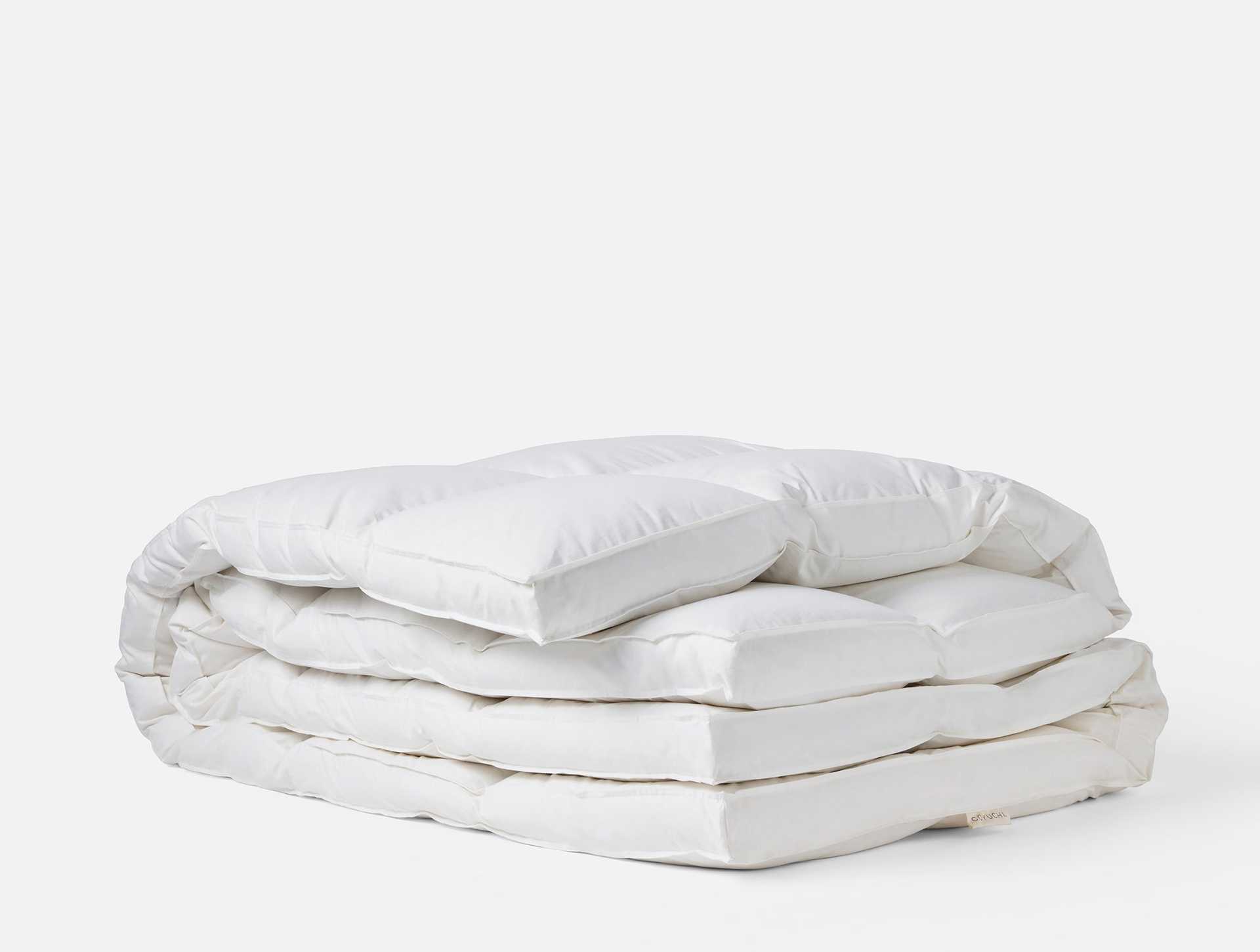
Loft—the apparent volume or puffiness of a comforter—can affect how the bed feels and looks, but loft is not a direct measure of comfort. A lofty layer may feel plush, while a more evenly distributed or lower-profile comforter may be easier to manage. Consider whether you like a substantial cover, whether it fits comfortably inside a duvet cover, and whether its size and drape suit the mattress.
Construction helps keep the filling in place. Stitching or internal compartments can reduce the chance of fill shifting into corners or leaving thin areas, though designs vary. Look for clear product details about quilting, seams, dimensions, and recommended use. If a comforter is described as suitable for year-round use, seek the specifications behind that description: fill amount, fabric, and care instructions offer a better basis for judgment.
Fit matters, too. A comforter that is too small may leave sleepers exposed, while an oversized one can feel cumbersome or hang heavily at the sides. Check the dimensions against the mattress, bed frame, and your preferred amount of overhang. If you plan to use a duvet cover, confirm that its dimensions are compatible. A cover that is significantly larger or smaller can allow the comforter to bunch, shift, or sit unevenly.
Shell fabric and the feel of the bed
The outer shell is part of the comforter’s performance, not just its appearance. A breathable natural-fiber shell, such as cotton, can complement wool’s moisture-handling characteristics, while the weave and finish shape the hand, drape, and durability. A tightly woven fabric may help contain the filling; a softer, lighter shell may feel more relaxed. The best choice depends on how the comforter will be used and whether it will be covered.
Look for the shell’s fiber content, weave if provided, and care guidance. Labels and descriptions can vary, so avoid assuming that words such as “natural,” “organic,” or “breathable” answer every practical question. They do not tell you by themselves how warm a specific comforter will be, how it is assembled, or whether it can be washed at home. The care label and the maker’s instructions are the final reference for maintenance.
Texture can make a noticeable difference in daily use. Some sleepers prefer the crisp surface of a plain cotton cover; others want a softer, more relaxed finish. If the comforter will be placed inside a duvet cover, the cover’s fabric also affects how the bed feels. Together, shell and cover create the surface that meets the sleeper, so think about them as a system rather than separate choices.
Choosing wool for your bedroom
Before choosing a wool comforter, begin with the room. Is it consistently cool, or does the temperature vary as heating and ventilation change? Do you sleep under one layer or several? Are you sensitive to weight or drawn to a more enveloping bed? These everyday observations are often more useful than a generic claim that a comforter suits everyone.
Next, read the specifications carefully. Confirm the fill material, the fill weight or other warmth guidance, the shell composition, available sizes, and construction details. Then read the care instructions before buying. A comforter that needs careful handling may still be a good fit, but only if its maintenance requirements work for your household. If you prefer to wash bedding frequently, a product that calls for limited washing may not match your routine.
For a shared bed, account for different preferences. One sleeper may want a warm, substantial layer while another prefers less insulation. Separate blankets, a lighter comforter, or a flexible layering arrangement can sometimes work better than trying to find one cover that satisfies both people in every season. A comforter is a personal textile as much as a decorative object; comfort depends on how it performs for the people using it.
A quick checklist before you decide
- Does the stated fill weight or warmth guidance match the temperature of your bedroom?
- Are the comforter dimensions suitable for your mattress and preferred drape?
- Will it fit inside the duvet cover you intend to use?
- Do the shell and construction details meet your preferences for feel and upkeep?
- Can you follow the stated airing, spot-cleaning, and washing instructions?
A removable cover makes routine protection easier
A duvet cover is a practical first line of protection for a comforter. It absorbs routine contact, helps keep surface dust and spills away from the inner layer, and can be removed for laundering. That can reduce the need to clean the comforter itself, which is especially useful when the maker recommends limited washing. A cover also gives you an easy way to change the bed’s color or texture without replacing the insulating layer.
Choose a cover that fits the comforter closely enough to prevent excessive shifting, while leaving adequate room for the filling to spread. Follow the cover’s own laundering instructions, and allow it to dry fully before putting it back on the bed. When making the bed, fasten any interior ties or closures provided by the cover and comforter; these can help keep the layers aligned through the night.
A cover is not a reason to ignore the comforter’s care needs. It cannot prevent every stain or remove moisture that has reached the fill. Regular airing, prompt attention to spills, and appropriate storage remain important. Still, using a cover consistently is one of the simplest ways to make everyday bedding maintenance more manageable.
Care that protects the construction
Wool comforters generally benefit from measured care rather than frequent washing. Repeated or unsuitable cleaning may affect the fill’s distribution or the way the comforter holds its shape. Always start with the manufacturer’s label and instructions: products differ, and one comforter’s permitted wash method should not be assumed to apply to another. If the instructions recommend professional cleaning or discourage routine machine washing, treat that guidance as part of the product’s normal upkeep.
Airing is a simple maintenance habit. Periodically remove the duvet cover and let the comforter air in a clean, dry, well-ventilated place. Fresh air can help disperse accumulated odors and restore a fresher feel. Avoid leaving it damp, exposing it to harsh conditions, or storing it before it is completely dry. If the maker specifically recommends sunning, follow its advice; otherwise, do not assume prolonged direct sunlight is appropriate for every shell or finish.
For small marks, spot cleaning may be preferable to washing the whole comforter, if the care instructions allow it. Use a mild method suitable for the fabric, work gently, and avoid soaking the filling. Afterward, make sure the cleaned area dries thoroughly before the comforter returns to use. Damp fill or fabric can develop unwanted odors and may not dry evenly, so patience matters more than speed.
When a deeper clean is necessary, do not improvise with a washer or dryer without checking the label. A comforter’s size, weight, and internal construction can make home laundering unsuitable even when the fiber itself is washable. If professional cleaning is advised, choose a service familiar with the maker’s requirements and explain the fill and construction. After cleaning, inspect the comforter for dampness or uneven fill before covering it again.
- Use a duvet cover to limit everyday exposure to skin oils, dust, and spills.
- Air the comforter periodically in a clean, dry space.
- Spot clean only when permitted, using a gentle approach and allowing complete drying.
- Wash or professionally clean only according to the care label.
- Store the comforter clean and fully dry, with enough room to avoid crushing its fill for long periods.
Storing it between seasons
If you switch to lighter bedding in warm weather, prepare the comforter before putting it away. Air it, check for marks, and make sure it is fully dry. A breathable storage bag or clean cotton enclosure can help shield it from dust while avoiding the trapped moisture that may occur in a sealed container. Keep it in a dry, clean place away from direct heat and dampness.
Avoid compressing the comforter tightly for long periods unless the maker provides specific storage guidance. Excessive compression can flatten loft, and a crowded closet may leave it difficult to air out. When the cooler season returns, unpack it, allow it to breathe, and check that the filling is evenly distributed before putting it back on the bed.
Common assumptions to set aside
“Wool always means warm.” Wool can insulate, but warmth varies with fill amount, construction, shell, and room conditions. A lighter wool comforter may feel different from a densely filled one.
“Breathable means cool.” Breathability can support moisture exchange, but it does not erase insulation. A comforter can be breathable and still feel too warm for a particular sleeper or room.
“Natural fibers need no special care.” Fiber origin does not determine cleaning instructions. Follow the product’s specific label, especially before washing or drying.
“One comforter should work perfectly all year.” Some people use a single comforter year-round; others adjust layers with the weather. The right arrangement is the one that can adapt to your actual home and preferences.
A considered choice, not a seasonal shortcut
Wool can be a compelling comforter fill for sleepers who value insulation alongside moisture management. Its usefulness across seasons, however, is not automatic. Fill weight sets an important part of the warmth level; the shell and construction shape feel and performance; and the room itself changes the result. A careful look at specifications will tell you more than a season printed on a label.
Care is equally central. A removable cover helps protect the comforter in daily use, while periodic airing, gentle spot cleaning, and careful adherence to washing instructions can support its longevity. The best bedding choice is not simply the one with the most appealing material story. It is the one whose warmth, handling, and maintenance fit the rhythms of your bedroom.
When choosing, start with the conditions you actually sleep in, then compare fill, dimensions, shell, construction, and care. That practical sequence makes it easier to judge whether wool is right for you—and to enjoy its comfort without expecting any fiber to do more than it can.